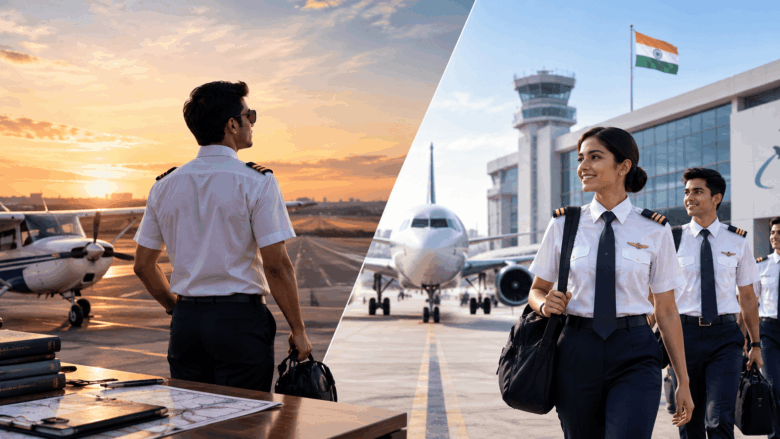


Dreaming of sitting in the cockpit of a commercial airliner and flying passengers across the country—or even around the world? If you’ve just completed your 12th standard and are wondering how to become an airline pilot in India, you’re not alone.
Every year, thousands of students explore aviation as a career, attracted by the excitement of flying, global travel opportunities, professional prestige, and strong earning potential. However, many aspiring pilots are unsure where to start, what qualifications are required, how much training costs, and how long the journey takes.
This guide will walk you through the complete roadmap to becoming an airline pilot in India after 12th, from eligibility requirements and licenses to training stages, career opportunities, and practical advice that can help you make informed decisions.
Why Choose a Career as an Airline Pilot?
Being an airline pilot is much more than operating an aircraft. Pilots are highly trained professionals responsible for passenger safety, flight operations, navigation, weather assessment, and decision-making under varying conditions.
Some of the key benefits of becoming a pilot include:
- High earning potential
- Global career opportunities
- Dynamic work environment
- Continuous professional growth
- Strong demand for trained pilots
- Opportunity to work with leading airlines
With India’s aviation sector expanding rapidly and airlines placing large aircraft orders, the demand for qualified pilots is expected to remain strong in the coming years.
Can You Become a Pilot After 12th?
Yes, absolutely.
Most students begin their pilot journey immediately after completing Class 12. In fact, this is one of the most common entry points into a professional pilot training course in India.
Educational Qualification
To pursue a Commercial Pilot Licence (CPL), you must have completed:
- 10+2 with Physics and Mathematics
- Minimum age of 17 years to start training
- Minimum age of 18 years for CPL issuance
If you did not study Physics or Mathematics in Class 12, you can complete these subjects through recognized open schooling programs and still become eligible.
Step-by-Step Roadmap to Become an Airline Pilot in India
Let’s break the journey into clear stages.
Step 1: Clear the DGCA Medical Examination
Before enrolling in a pilot aviation course, you should undergo DGCA-approved medical assessments.
The medical process generally includes:
- Vision testing
- Hearing examination
- Blood tests
- ECG and general health assessment
- Aviation medical evaluation
Good health and fitness are essential because pilots must meet strict safety standards.
Many students choose to complete their medicals early to avoid surprises later in the training process.
Step 2: Enroll in a Pilot Training Program
The next step is joining a reputable flying academy that offers structured training aligned with DGCA requirements.
A professional pilot training course typically combines:
- Ground school training
- Flight simulator exposure
- Practical flying lessons
- DGCA exam preparation
Choosing the right academy is important because the quality of instruction, aircraft fleet, training infrastructure, and student support can significantly impact your progress.
Step 3: Obtain a Student Pilot Licence (SPL)
The Student Pilot Licence is generally the first aviation licence issued during training.
To obtain an SPL, candidates must:
- Meet age requirements
- Pass basic medical standards
- Clear an oral or written assessment conducted by the flying school
This licence allows students to begin practical flight training under supervision.
Step 4: Earn a Private Pilot Licence (PPL)
The Private Pilot Licence is the first major milestone in pilot training.
A PPL allows you to fly aircraft for non-commercial purposes and helps build foundational flying skills.
Training typically covers:
- Aircraft systems
- Navigation
- Meteorology
- Air regulations
- Flight planning
- Communication procedures
This stage develops confidence and aircraft handling skills before progressing to commercial training.
Step 5: Complete Commercial Pilot Licence (CPL) Training
The Commercial Pilot Licence is the most important qualification required to work as a professional pilot.
A commercial pilot course includes:
- Advanced flight training
- Cross-country flying
- Night flying
- Instrument flying
- Emergency procedures
- Aviation theory subjects
Students must complete DGCA-mandated flying hours and pass required examinations.
Once you obtain your CPL, you become eligible to pursue airline opportunities and advanced training programs.
DGCA Exams You Need to Clear
Throughout your commercial pilot course, you’ll need to pass DGCA examinations in subjects such as:
- Air Navigation
- Air Regulations
- Aviation Meteorology
- Technical General
- Technical Specific
- RTR (Radio Telephony Restricted)
These exams ensure pilots possess the theoretical knowledge necessary for safe flight operations.
Many successful pilots dedicate substantial time to exam preparation alongside flight training.
What Happens After Getting Your CPL?
Receiving your CPL is a major achievement, but it is not always the final step before joining an airline.
Most airline-bound pilots continue with:
Multi-Engine Rating
This qualification enables pilots to fly aircraft with multiple engines.
Instrument Rating (IR)
Instrument flying skills allow pilots to operate safely in low-visibility conditions using cockpit instruments.
Type Rating
A Type Rating qualifies pilots to operate a specific aircraft model such as:
- Airbus A320
- Boeing 737
Since airlines operate complex aircraft systems, pilots must complete aircraft-specific training before entering airline operations.
How Long Does It Take to Become an Airline Pilot?
The timeline varies depending on training availability, weather conditions, examination schedules, and student performance.
A typical pathway looks like this:
| Training Stage | Approximate Duration |
| Ground Training | 4–6 Months |
| Flight Training | 12–18 Months |
| CPL Completion | 18–24 Months |
| Type Rating | 2–4 Months |
In most cases, students can complete their journey from 12th standard to CPL within approximately 18 to 24 months.
Cost of Becoming an Airline Pilot in India
One of the most common questions students ask is: “How much does pilot training cost?”
The total investment typically includes:
- Ground school training
- Flying hours
- Simulator training
- DGCA examinations
- Medical assessments
- Licence fees
- Type Rating (if applicable)
Depending on the academy and training pathway chosen, the overall cost can range from ₹45 lakh to ₹80 lakh or more.
While this is a significant investment, aviation remains one of the highest-paying career paths for qualified professionals.
Skills Required to Become a Successful Pilot
Technical training is only one part of the equation.
Successful airline pilots also develop:
Strong Communication Skills
Pilots constantly communicate with air traffic controllers, crew members, and airline operations teams.
Decision-Making Ability
Quick and accurate decisions are essential, especially during unexpected situations.
Situational Awareness
Pilots must continuously monitor weather, aircraft performance, navigation, and surrounding traffic.
Discipline and Professionalism
Aviation is built on procedures, safety standards, and accountability.
Students who embrace these qualities often excel during training and airline assessments.
Career Opportunities After Pilot Training
After completing a pilot aviation course and obtaining the necessary licences, career options may include:
- Commercial Airline Pilot
- First Officer
- Charter Pilot
- Corporate Pilot
- Cargo Pilot
- Flight Instructor
- Government Aviation Services
As experience increases, pilots can progress to Senior First Officer, Captain, Training Captain, and management positions within airlines.
How to Choose the Right Flying Academy
Not all aviation institutes offer the same level of training and support.
Before enrolling in an aviation course, consider:
DGCA Compliance
Ensure the academy follows DGCA standards and requirements.
Experienced Instructors
Learning from seasoned aviation professionals can make a significant difference.
Fleet Availability
Adequate aircraft availability helps students complete flying hours on schedule.
Student Support
Good training organizations assist students with DGCA exams, documentation, and career guidance.
Industry Reputation
Speak with current students and alumni whenever possible.
A strong training foundation can positively influence your entire aviation career.
Why Many Students Start Their Aviation Journey with InfiniFly Aviation
For students exploring aviation careers, InfiniFly Aviation provides structured guidance, aviation education, and professional support designed to help aspiring pilots understand the complete pathway from student to airline professional. The academy focuses on aviation knowledge, DGCA exam preparation, career counseling, and industry-oriented training support.
Whether you’re just beginning to research a pilot training course or actively planning your CPL journey, getting proper guidance early can help you avoid costly mistakes and stay focused on your long-term career goals.
Final Thoughts
Becoming an airline pilot in India after 12th is a challenging yet highly rewarding journey. It requires dedication, discipline, financial planning, and consistent effort—but for those passionate about aviation, the rewards can be extraordinary.
The key is to start with the right information, complete your medical requirements, choose a quality pilot training course, stay committed to your studies, and steadily progress through each licence stage.
Every airline captain once started as a student wondering where to begin. Your aviation journey can start today with the right preparation and guidance.
Ready to Explore a Career in Aviation?
If you’re considering a commercial pilot course or want expert guidance on the best aviation course options after 12th, connect with the team at InfiniFly Aviation and take the first step toward your dream cockpit career.