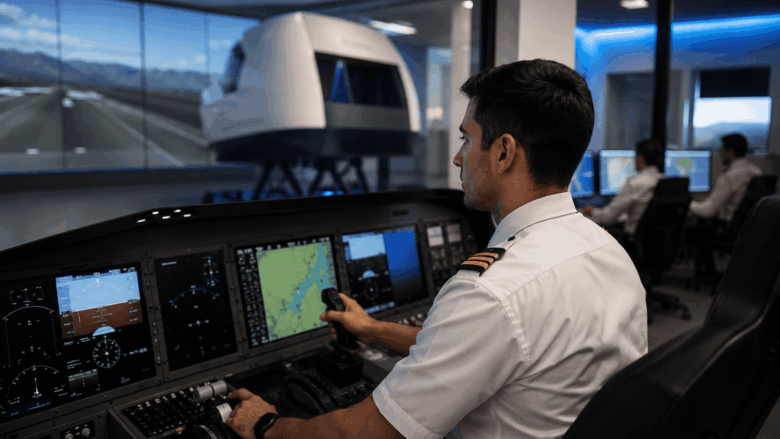


If you are preparing for a pilot career in India, you have probably seen both papers listed in your syllabus and wondered why one is called “General” and the other “Specific.” The short answer: DGCA Technical General vs Technical Specific comes down to breadth versus depth. Technical General tests what you know about aircraft in general. Technical Specific tests what you know about one particular aircraft type, like an A320 or a Boeing 737.
Many students in Ahmedabad and across Gujarat mix these up because both fall under “technical” subjects. They are separate DGCA exams, taken at different stages, for different reasons. This guide explains the difference in plain language, so you can plan your DGCA certifications with fewer surprises.
Quick Answer: Technical General vs Technical Specific
- Technical General is a core ground exam for your CPL (and later ATPL). It covers how aircraft work in general: airframes, engines, electrical systems, instruments and more.
- Technical Specific is a type-related exam. It covers the systems, limitations and procedures of one aircraft type you are being rated on.
- You take Technical General early, as part of your ground school journey. You take Technical Specific later, around your type rating.
- Technical General opens the door to your commercial licence. Technical Specific opens the door to flying a particular aircraft for an airline.
A quick clarification: people often call these “licenses,” but strictly speaking they are DGCA examinations. They lead to your licence and aircraft type endorsement rather than being licences themselves. Using the phrase “Technical General license” is common in everyday talk, and that is fine, just know what you are actually attempting.
What Is DGCA Technical General?
Technical General is one of the foundation ground subjects every aspiring commercial pilot in India must clear. Along with Air Navigation, Air Regulations, Aviation Meteorology and RTR, it forms the theory backbone of your CPL.
The paper checks whether you understand aircraft as machines, independent of make or model. Typical areas include:
- Airframe structure and flight controls
- Piston and turbine engines
- Fuel, oil and hydraulic systems
- Electrical systems and batteries
- Pressurisation and air conditioning
- Flight instruments and basic avionics
- Fire protection, oxygen and ice protection
You are not learning the buttons of one cockpit here. You are learning why a turbine engine behaves the way it does, how a hydraulic system transmits force, and what happens when a generator fails. This is the kind of knowledge that makes you a thinking pilot, not just someone who follows a checklist.
Who takes it and when
Every CPL aspirant takes Technical General. Most students clear it during their ground classes, before or alongside flying hours. Since this paper needs concept-level understanding, rote learning rarely works. Students who go through structured ground classes with a good instructor tend to find the subject far more manageable than those who self-study from scattered notes.
What Is DGCA Technical Specific?
Technical Specific narrows everything down to one aircraft type. Once you know how aircraft work in general, the exam asks: do you know how this aircraft works, and how to operate it safely?
Depending on the type, the paper draws on:
- Aircraft systems as designed by that manufacturer
- Operating limitations and speeds
- Normal, abnormal and emergency procedures
- Performance and weight-related considerations for the type
- Type-specific warnings, cautions and system logic
An A320 pilot and a B737 pilot will both have cleared Technical General, but their Technical Specific papers will look very different, because the aircraft themselves are designed differently.
Who takes it and when
Technical Specific belongs to the type rating stage. After you have a CPL and are preparing to be endorsed on an aircraft type, this exam confirms you understand that aircraft before you are cleared to fly it. If you later move to a different type, you go through the type-specific process again for that aircraft.
Exact procedures, eligibility and exam formats are set by DGCA and can change through Civil Aviation Requirements and circulars, so always confirm the latest rules on the official DGCA website or with your training organisation before you register.
Technical General vs Technical Specific: Side-by-Side
| Point | Technical General | Technical Specific |
| Scope | Aircraft systems in general | One specific aircraft type |
| Stage | CPL ground training | Type rating stage |
| Depth | Concept-based understanding | Type-based operational knowledge |
| Applies to | Every CPL aspirant | Pilots being rated on a type |
| Repeated? | Cleared once as part of licence theory | Needed per aircraft type |
| Purpose | Build technical foundation | Qualify you to operate a specific aircraft |
Prerequisites: What You Need Before Each Exam
For Technical General, you generally need to have met the basic eligibility for pilot training in India: age requirements, Class 12 with Physics and Mathematics for the CPL route, and a valid medical as applicable. You also need to be registered for the ground exams and have prepared the syllabus. Confirm the current eligibility rules with DGCA, as they get updated.
For Technical Specific, you should already hold (or be about to hold) a CPL and have cleared the required theory papers. You then undergo type rating training on the chosen aircraft. Many candidates take pre-type-rating preparation to walk into the simulator with the systems knowledge already in place.
Career Implications: Where Each One Takes You
Technical General is non-negotiable if you want a commercial licence. There is no career path to an Indian airline seat without it. It is the paper that proves you have a solid technical base, and airlines value that base during interviews and assessments, where systems questions are common.
Technical Specific matters when you are chasing a specific role. Airlines hire pilots for particular types. IndiGo and Air India fly Airbus and Boeing types, regional operators fly ATRs, and business aviation runs on entirely different aircraft. Your type rating, backed by Technical Specific knowledge, is what makes you eligible for a seat on that fleet.
Here is a simple way to picture it:
- Technical General gets you your CPL.
- Type rating with Technical Specific gets you qualified on the aircraft an airline actually flies.
- Airline preparation gets you through the selection process.
If you are still working out how long the whole journey takes, the guide on how many hours it takes to become a commercial pilot in India gives a useful timeline.
How to Choose Your Path
Here is the honest part: you do not really choose between the two. You take them in sequence. What you do choose is the timing and the aircraft type. A few practical pointers:
- Start with Technical General. Get your ground subjects done well. Weak fundamentals here will make type rating harder and more expensive.
- Pick your target type based on your career plan. Look at which fleets Indian airlines are expanding, and talk to instructors and working pilots before committing money to a type rating.
- Do not rush type rating without your basics. Students who skip proper Technical General understanding often struggle with systems questions in the simulator.
- Budget for both stages. Type ratings are a significant investment, so plan ahead rather than deciding at the last minute.
If you are also weighing where to train, this comparison of pilot training in India vs abroad can help you decide, since your training route affects how and when you sit these exams.
Common Mistakes Students Make
- Treating Technical General as a memory test. The paper rewards understanding. If you can explain why a system works, the questions become much easier.
- Ignoring Technical General after clearing it. You will use those concepts in every type course and airline interview later.
- Choosing an aircraft type without research. A type rating is tied to one aircraft, so choose with your target airlines in mind.
- Relying on outdated study material. DGCA syllabus and question patterns change, so use current resources.
- Studying alone with no doubt-solving support. Technical subjects are much easier with someone who can clarify tricky topics on the spot.
Preparing Smartly in Ahmedabad
For students in Ahmedabad and across Gujarat, classroom-based DGCA ground classes give you a structured way to cover Technical General along with Air Navigation, Meteorology, Air Regulations and RTR. Regular classes, mock tests and instructor feedback save a lot of time compared to figuring out the syllabus alone.
When you reach the type rating stage, pre and post type rating classes can help you prepare for the systems and procedures of your chosen aircraft, so the simulator sessions feel less overwhelming.
Final Thoughts
The DGCA Technical General vs Technical Specific question is simpler than it first looks. Technical General is your foundation, covering how aircraft work in general. Technical Specific is your specialisation, covering how one aircraft type works and how to fly it safely. One builds the pilot; the other qualifies that pilot for a specific aircraft.
Plan them in order, respect both, and always verify current DGCA rules before registering for any exam. If you are in Ahmedabad and want guidance on where to begin, talk to an experienced training team who can map out your ground classes, exams and type rating in a sensible sequence.