

If you’ve spent any time researching how to become a pilot in India, you’ve run into two words over and over: CPL and cadet. They get thrown around like they’re interchangeable. They’re not.
One is a license. The other is a hiring arrangement built around that license. Confusing the two is the single biggest reason students end up choosing the wrong path for their situation, then spending two extra years and a few extra lakhs figuring that out.
This guide breaks down cadet pilot vs CPL training the way we’d explain it to someone sitting across our desk at InfiniFly Aviation — no sales pitch, just what actually happens once you commit.
What “CPL” Actually Means
CPL stands for Commercial Pilot Licence. It’s issued by the DGCA once you’ve completed your ground subjects, logged the required flying hours, and cleared your skill test. On its own, a CPL doesn’t guarantee you a job. It qualifies you to be considered for one.
Most students who take this route train independently — pick a flying school, complete ground classes, fly the required hours (often split between India and a country like the US or South Africa for weather and cost reasons), and walk out with a license in hand. What happens after that is entirely up to you: apply to airlines, build hours as a flight instructor, or take a type rating and hope a slot opens up.
If you want a clearer sense of what this route physically involves week to week, our CPL course page lays out the ground-to-flight training structure in more detail.
What a Cadet Pilot Program Actually Means
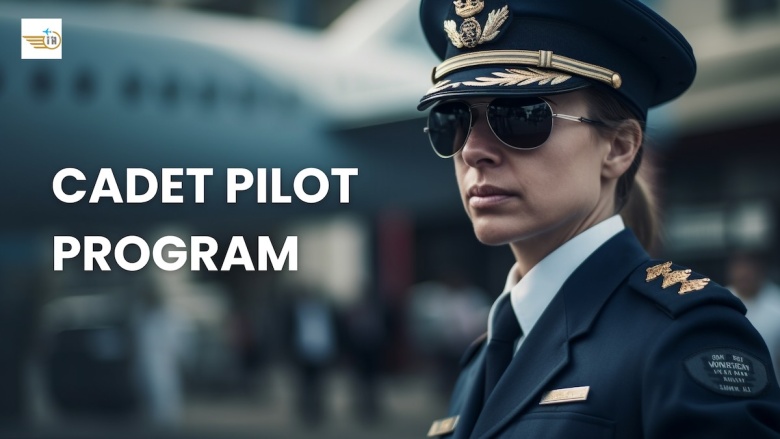
A cadet program is different. It’s an airline-linked pathway — you’re selected by (or in partnership with) an airline before you’ve completed your training, and the airline has some visibility into, or influence over, your training journey. In India, this usually looks like IndiGo’s or Air India’s cadet schemes, where selected candidates train at an approved flying school with a conditional promise of employment at the end, assuming they clear every checkpoint.
The appeal is obvious: a defined path, a named airline at the end of it, and less guesswork about where you’ll land. The catch is just as real: fewer seats, tougher selection, and less flexibility if your circumstances change mid-training.
Eligibility: Who Actually Qualifies
For a standard CPL, the bar is comparatively low. You need to be 17 to start flying (18 to hold the CPL), have passed 10+2 with Physics and Maths, and clear a DGCA Class 1 medical. That’s it. Anyone meeting these basics can enrol.
Cadet programs add a layer on top. Expect a formal selection process — written aptitude tests, group discussions, psychometric evaluation, sometimes a panel interview — before you’re even allowed to start training. Airlines are picking people they intend to employ for the next couple of decades, so they screen harder. Age cutoffs tend to be stricter too, often capping around 20-23 at the point of application.
If you’re not sure whether your academic background or age fits either route, our team walks through this regularly during admission counselling — it’s worth a conversation before you assume you’re locked out of one path or the other.
Cost: The Number Everyone Wants First
Here’s the honest version. Standalone CPL training in India, factoring ground school, flying hours (India plus an overseas block), and exam fees, typically runs anywhere from ₹35 lakh to ₹55 lakh depending on where you fly and how efficiently you complete your hours. Delays, repeat exams, and currency flying add up fast — this is where most students go over budget.
Cadet programs are marketed as more “structured” on cost, but they aren’t necessarily cheaper. Some airline-tied programs still require you to fund your own CPL training upfront, with the airline only guaranteeing an interview or type rating priority afterward. Others bundle a bond period, meaning you commit to working for that airline for a fixed number of years, sometimes with a penalty if you leave early. Read every clause on the bond before assuming a cadet seat is a financial shortcut.
We’ve written a detailed breakdown of where the real money goes in pilot course fees in India, including the hidden costs that catch most first-time applicants off guard. It applies to both routes.
Time Commitment: How Long Each Path Actually Takes
A standard CPL, done without major delays, takes 18 to 24 months from ground school to license in hand. Add another few months if you’re waiting on slot availability at flying schools abroad, or if you fail and have to repeat a DGCA paper.
Cadet programs typically run on a similar training timeline, since the actual flying and ground requirements don’t change — DGCA rules apply either way. What differs is the selection process before training even starts, which can add several months of waiting, testing, and interview rounds. Once selected, though, some cadet tracks move faster to a job, because the interview and type rating queue that independent CPL holders face is effectively skipped.
Career Outcomes: What Happens After You’re Licensed
This is where the real difference shows up.
A CPL holder finishes training and enters the open job market. You’ll be applying to airlines directly, competing with everyone else holding the same license, and your logbook, interview performance, and sometimes plain timing will decide how quickly you get hired. Some pilots get picked up within months. Others spend a year or two building hours as instructors first. If you want to know what that interview process actually looks like, our post on airline interview questions for pilots is a good place to prepare early, well before you’re staring down a panel.
A cadet, assuming they clear every stage of training and evaluation, moves toward employment with the sponsoring airline with far less uncertainty. That’s the entire value proposition — you know, roughly, where you’re headed before you’ve logged your first solo hour.
But “assuming they clear every stage” is doing a lot of work in that sentence. Cadets who wash out of a stage, fail a check ride, or don’t meet an airline’s evolving hiring needs can find themselves back in the same open market as everyone else, sometimes with a bond obligation still hanging over them.
Pros and Cons, Side by Side
CPL (independent route)
Pros: More flying schools to choose from, no age or academic gatekeeping beyond DGCA minimums, full control over your training pace and location, no bond tying you to one employer.
Cons: No guaranteed job at the end, you’re responsible for your own airline preparation and networking, market timing affects hiring more than it should.
Cadet Pilot Program
Pros: A named airline and a defined path, often faster movement into a cockpit once hired, less ambiguity during the job-hunting phase.
Cons: Brutal selection ratios, stricter eligibility, potential bond periods, less flexibility if your life circumstances or the airline’s hiring needs change mid-program.
So Which Path Should You Actually Choose?
If you’re fresh out of 12th and unsure exactly which airline you want to fly for — or whether commercial aviation is even the right long-term fit — the independent CPL route gives you more room to figure that out without locking into one employer’s timeline. It also suits people who want control over where and how they train. Our earlier piece on becoming an airline pilot in India after 12th walks through this exact decision point in more depth.
If you’re confident about a specific airline, meet the stricter eligibility window, and you’d rather trade some flexibility for a clearer runway to employment, a cadet program is worth pursuing — provided you read the bond terms carefully and go in with realistic expectations about the selection difficulty.
Neither path is objectively “better.” One trades certainty for flexibility. The other trades flexibility for certainty. Be honest with yourself about which trade-off you can actually live with for the next two to three years, because that decision shapes more than your training schedule. It shapes how much control you have over your early career.
A Final Word
Whichever direction you take, the fundamentals don’t change: you still need solid ground knowledge, real flying competence, and the discipline to show up prepared for every check ride and interview. The license or the airline badge doesn’t make you a pilot. The training does.
If you want to talk through which route fits your specific situation — your budget, your timeline, your academic background — that’s a conversation worth having before you enrol anywhere, not after.